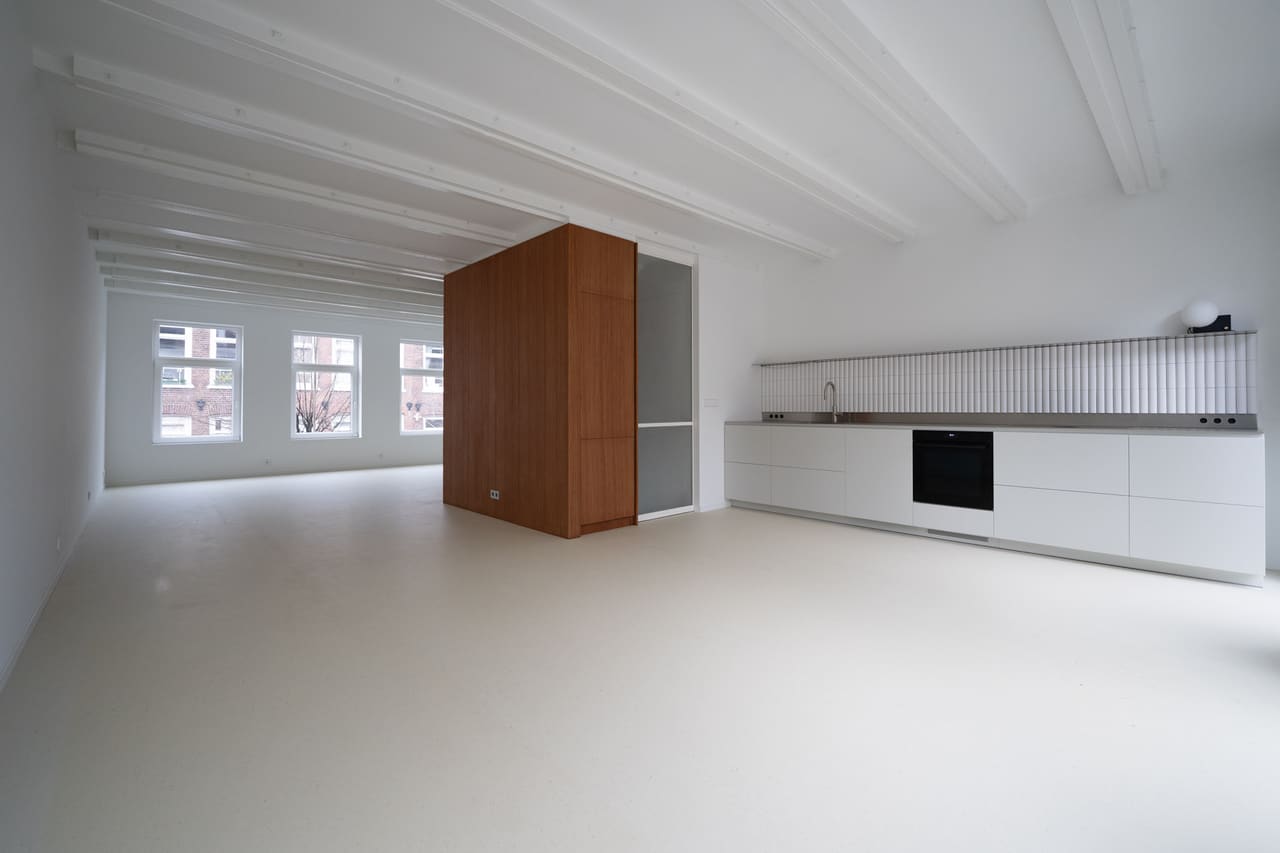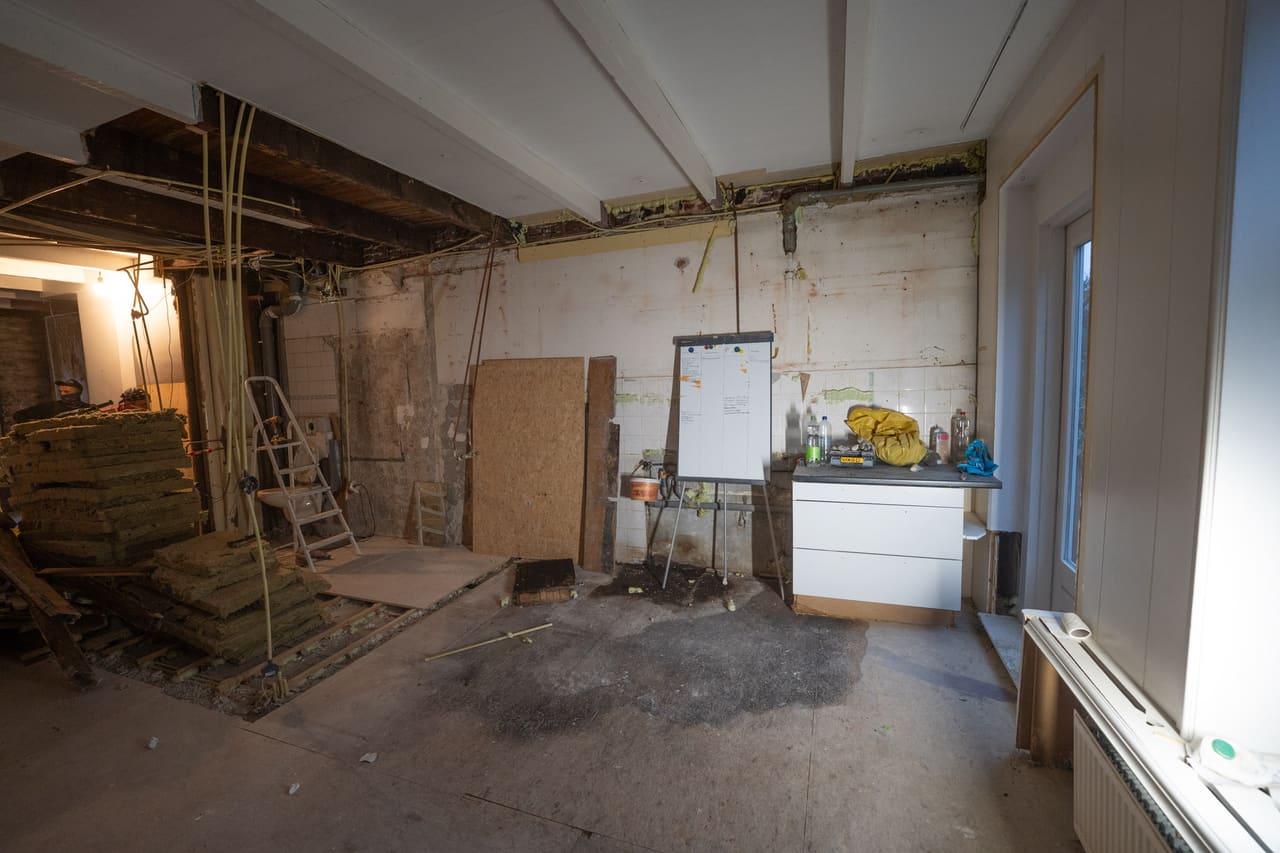

The short answer
A complete villa renovation usually takes several months on site, plus preparation. As a reference, these are the timelines published by Tommy’s Service, the build team behind our projects: a bathroom four to six weeks, a kitchen six to eight weeks, a full apartment three to five months. A villa is usually larger and more complex, so plan for more rather than less.
If an environmental permit is needed, preparation comes on top. In the regular procedure the municipality decides within 8 weeks and can extend that once by up to 6 weeks. According to Tommy’s Service, permits and owners’ association approval together can add six to twelve weeks, which is why we start them first.
The phases and their timelines
A villa renovation has a preparation half and a build half. The preparation often decides whether the build runs smoothly.
| Phase | What happens | Timeline (indication) |
|---|---|---|
| 1. Private consult and survey | Meeting on site: wishes, budget and an initial assessment of the property. | One visit on site |
| 2. Design and materials | Layout, 3D visuals, materials and technical detailing. | Depends on scope and speed of decisions |
| 3. Surveys | Structural engineer; for demolition in homes built before 1994, an asbestos inventory if asbestos is known or suspected; for a listed building, possibly a building-history survey. | Before the permit application and demolition |
| 4. Permit (if needed) | Application through the national Omgevingsloket; owners’ association approval if relevant. | Statutory decision period 8 weeks, extendable once by up to 6 weeks; permit and VvE together 6 to 12 weeks (Tommy’s Service indication) |
| 5. Demolition notice (if needed) | Required if asbestos is removed or demolition waste is estimated at more than 10 m³. | At least 4 weeks before demolition |
| 6. The build | Demolition, structure, services, fit-out, kitchen, bathrooms and joinery. | Bathroom 4 to 6 weeks, kitchen 6 to 8 weeks, full apartment 3 to 5 months (Tommy’s Service indication); a villa usually longer |
| 7. Handover and aftercare | Walk-through together; the snag list is closed before we leave. | Directly after the build |
What drives the schedule most
- Scope. Renewing one floor is quicker than stripping the whole house, changing the layout and replacing all services.
- Permits and listed status. If an environmental permit is needed, the build only starts after the decision. Listed buildings add advisory rounds. See do you need a permit to renovate?
- Lead times. Window frames, natural stone, kitchens and bespoke furniture are only made once the design is fixed. Choosing early avoids waiting on site.
- Speed of decisions. The sooner choices are fixed, the less the build stalls. Changes during construction almost always cost time.
- Hidden defects. Only after demolition is the condition of joists, pipework and foundations fully visible. A realistic schedule leaves room for that.
- Season. Work on the facade, roof, window frames and garden is more weather-dependent than work indoors.
The sequence of work in a villa
In a complete renovation the trades follow a fixed logic. Rough work comes before finishing, never the other way round:
- Protection of what stays, then demolition and strip-out.
- Structural work: openings, joists, foundation repair if needed.
- Window frames, facade and roof, so the house is wind- and watertight.
- First-fix services: electrics, water, drainage, ventilation and heating.
- Floors, walls and ceilings: screed, plastering and insulation.
- Kitchen, bathrooms and joinery.
- Decorating, lighting and second fix.
- Garden and outdoor space, then handover.
How to speed up your renovation
The fastest renovations win their time before the first day of demolition. What helps:
- Run the Vergunningcheck early and, if in doubt, request a pre-application meeting with the municipality. Then you know in time whether the 8-week decision period lands on the critical path.
- Commission surveys before applying. Structural calculations and, for homes built before 1994, an asbestos inventory are often needed for the permit or the demolition.
- Plan the demolition notice. If asbestos is removed or demolition waste is estimated at more than 10 m³, demolition must be notified at least four weeks in advance.
- Choose long-lead items first. Window frames, natural stone, the kitchen and bespoke furniture often set the pace of the fit-out.
- Agree a fixed weekly decision moment. That way questions from site never wait long.
- Decide early about living on site. Working in an empty house is faster than phasing around an occupied one.
Can you stay in the house during the renovation?
For a single room, usually yes. For a complete renovation Tommy’s Service advises against it: dust barriers protect the rest of the house, but not your evenings. If staying is unavoidable, the work is phased so that a kitchen and a bathroom are always usable. Bear in mind that phasing extends the overall timeline.
How we keep the schedule on track
- We start the permit and any owners’ association approval first, so they stay off the critical path.
- You receive a schedule with milestones per phase in advance.
- One site manager guards the sequence of the trades and the delivery of materials.
- A weekly update on progress, planning and upcoming decisions.
Want to know what this means for your villa? Book a private consult, read what a villa renovation costs or see our approach to a complete villa renovation.
Sources
- Tommy’s Service: frequently asked questions (cost, timelines, permits, owners’ associations) Indications from the build team that carries out Premium Houses projects.
- IPLO: regular procedure for an environmental permit (in Dutch)
- IPLO: short and extended preparation procedures (in Dutch)
- IPLO: asbestos inventory duty for demolition work (in Dutch)
- IPLO: notification duty for demolition (in Dutch)
Consulted on 6 October 2026.